
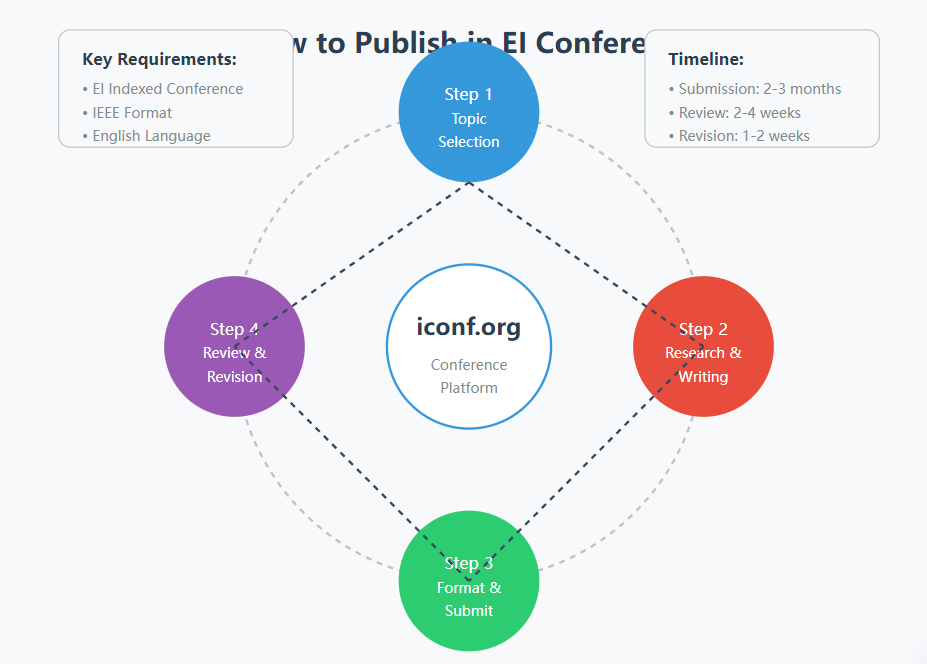
1. Timeline Overview: From Submission to Publication
While the timeline varies by conference, a standard process looks like this:
-
Submission Deadline: You submit your paper, often 3–6 months before the conference date.
-
Review Period: Most conferences conduct peer review within 1–2 months.
-
Acceptance Notification: Authors usually receive acceptance notices 1–2 months after submission.
-
Camera-Ready Submission: Once accepted, you submit the final version for publication—typically 2–4 weeks before the conference.
-
Proceedings Publication: Depending on the conference, proceedings may be published at the time of the event, or within 2–12 weeks afterward.
-
Indexing (e.g., EI, Scopus): If the proceedings are indexed, it may take an additional 1–6 months to appear in the database.
In total, it may take anywhere from 3 to 9 months from submission to the paper appearing in an academic index.
2. What Affects the Publication Speed?
Several factors can influence how quickly your conference paper is published:
-
Publisher efficiency (e.g., IEEE, Springer, ACM): Some publishers are faster in processing and indexing.
-
Conference type: High-tier conferences often have stricter workflows, which can extend timelines.
-
Paper formatting: Papers not following template guidelines may face delays.
-
Post-conference proceedings: Some conferences publish after the event, which may add weeks or months.
3. How to Track Your Paper's Status
After the conference, you may want to track whether your paper has been officially published or indexed. Here’s how:
-
Check the publisher’s digital library for the conference proceedings.
-
Use indexing databases like EI Compendex or Scopus to search by paper title or author name.
-
Visit academic.net to find updates on conference schedules and publication timelines for various fields.
Tracking tools and alerts from academic platforms can also notify you once the indexing is complete.
4. Tips for Faster Processing
To avoid unnecessary delays:
-
Submit your paper early and follow all formatting rules.
-
Upload camera-ready versions and copyright forms promptly.
-
Use conferences that publish with well-established academic publishers.
-
Regularly monitor academic.net for events with faster or more transparent publication timelines.
Final Thoughts
Conference paper publication is generally faster than journal publishing, but it still requires careful planning and patience. While the timeline can range from a few weeks to several months, choosing the right event and staying organized can help speed things up. Use academic.net to explore conferences with efficient publishing workflows and stay on top of your academic goals.