
How Many Papers Can You Submit to One Conference? A Guide
As a submission deadline approaches, researchers often find themselves with more than one completed study. This leads to a common question: "How many papers can I submit to a single conference?"
The short answer is: it depends on the conference, but most do not have a strict limit on the number of submissions per author.
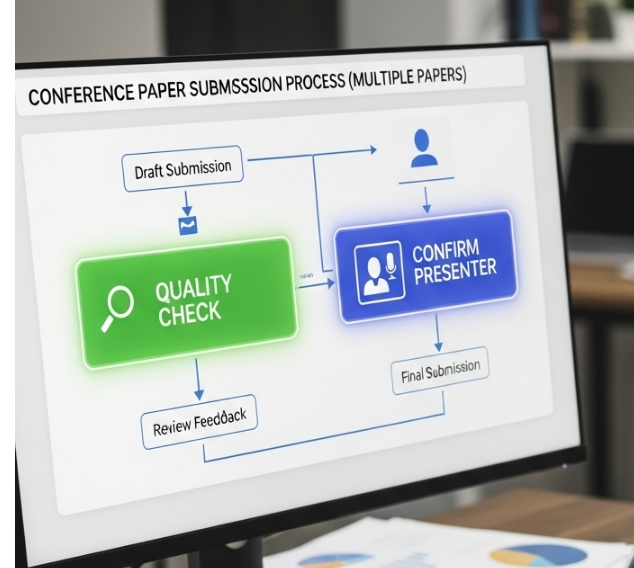
(Image Alt Text: A flowchart showing the process and considerations for submitting multiple papers to an academic conference.) (Image Filename: how-many-papers-to-submit-to-conference.png)
The first and most important step is to find the official policy for the specific conference you are targeting.
- Where to Look: The definitive answer will always be on the conference's official website, typically on the "Call for Papers," "Submission Guidelines," or "Author Instructions" page.
- What to Look For: Carefully read the guidelines for any language that explicitly limits the number of submissions per author or per research group. If no such limit is mentioned, it is safe to assume there isn't one.
Even if there's no official cap, several practical and ethical factors create a natural limit.
1. The "One Presentation per Person" Rule
This is the most common and significant constraint. Most conferences have a policy stating that a single registered attendee can only present one paper.
- What this means: If you, as the lead author, have three papers accepted, you cannot present all three yourself. Two of your co-authors must register for the conference (which involves paying the registration fee) and present the other two papers.
- Why it matters: Before submitting multiple papers, you must have a clear plan. Confirm with your co-authors that they are willing and able to register, travel, and present the work if it is accepted.
Your reputation as a researcher is built on the quality of your work, not the volume. Submitting multiple underdeveloped or mediocre papers is far worse than submitting one excellent, high-impact study. Reviewers are often assigned multiple papers in a similar field, and if they recognize your name on several low-quality submissions, it can negatively affect their perception of your work.
3. The Ban on "Salami Slicing"
This is a critical ethical guideline. Each paper you submit must be a substantial and distinct piece of research. "Salami slicing" refers to the unethical practice of splitting a single study into many small, shallow papers just to increase your publication count. If your multiple submissions are just minor variations of the same core idea, they will likely be rejected and could be flagged as an ethical violation.
For most individual researchers or small teams, submitting one or two distinct, high-quality papers to a single conference is a standard and respected practice.
Larger research labs with multiple projects led by different students may submit a higher number of papers, but these submissions represent a portfolio of the lab's diverse work, not just one person's output.
A Checklist for Multiple Submissions
Before you submit more than one paper, ask yourself these questions:
- Is Each Paper Substantial? Does each manuscript present a unique, complete, and significant contribution to the field?
- Have I Read the Guidelines? Have I double-checked the conference website for any explicit submission limits?
- Do I Have a Presentation Plan? For every paper I submit, is there a unique co-author ready to register and present it if accepted?
- Am I Submitting My Best Work? Is each paper polished to the highest possible standard, or am I dividing my attention and weakening the quality of all of them?
While the freedom to submit multiple papers to a conference is common, the responsibility lies with you to ensure it is done ethically and practically. The academic community values impactful, high-quality research above all else. Instead of asking "How many papers can I submit?", a better question is, "What is the best work I can submit?"
Focus on making each submission a powerful contribution, and you will build a stronger reputation than you ever could with a high volume of lesser-quality work.