
Scopus Indexed Proceedings vs. Non-Indexed: Why It Matters for Your Research Impact
For academics, publishing research is crucial, and conference proceedings are a common avenue for sharing preliminary findings, new methodologies, and innovative ideas. However, not all proceedings are created equal. The distinction between a Scopus-indexed conference proceeding and a non-indexed one carries significant weight for your career, visibility, and the long-term impact of your work.
Understanding this difference is vital for making informed decisions about where to submit your valuable research.
What Does "Scopus-Indexed" Mean?
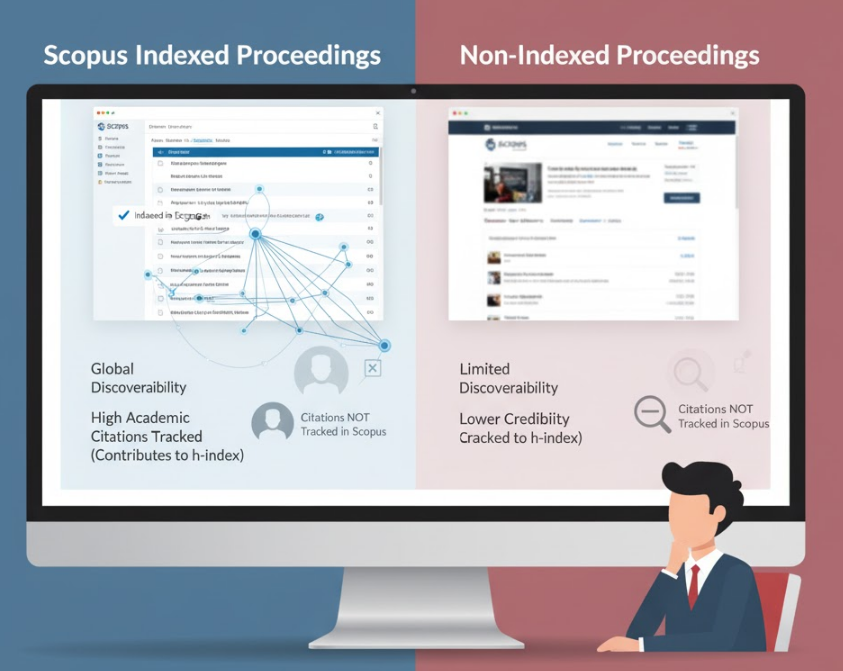
Scopus, owned by Elsevier, is one of the largest abstract and citation databases of peer-reviewed literature. When a conference proceeding (the collection of papers presented at a conference) is "Scopus-indexed," it means that:
-
Quality Vetting: The conference itself, or its associated publisher, has met Scopus's stringent quality criteria. This often includes aspects like a robust peer-review process, editorial quality, regularity of publication, and ethical standards.
-
Discoverability: Every paper within that proceeding is individually indexed and searchable within the Scopus database. This vastly increases its visibility to researchers worldwide.
-
Citations Tracked: Scopus tracks all citations to papers within its database. This means any citations your paper receives will be counted towards your individual author metrics (like h-index) and the impact metrics of your institution.
Key Differences: Indexed vs. Non-Indexed Proceedings
Let's break down the practical implications of publishing in each type of proceeding:
1. Discoverability and Visibility
-
Scopus-Indexed: Your paper becomes part of a globally recognized, searchable database. Researchers actively using Scopus for literature reviews will find your work. This dramatically increases the chances of your paper being read and cited.
-
Non-Indexed: Your paper's discoverability is limited to the conference website, a niche publisher's site, or potentially Google Scholar if it's picked up. It's much harder for others to find, leading to lower readership and citation potential.
2. Academic Credibility and Reputation
-
Scopus-Indexed: Publishing in an indexed proceeding signals that your work has passed a recognized quality filter. It enhances your academic reputation, makes your CV more impressive, and is often considered for promotion, tenure, or grant applications.
-
Non-Indexed: While not necessarily "bad" research, publishing in a non-indexed proceeding doesn't carry the same weight. It offers less external validation of quality and may be viewed as a less impactful publication by hiring committees or funding agencies.
3. Citation Tracking and Author Metrics (h-index)
-
Scopus-Indexed: Crucially, citations to your paper are automatically tracked by Scopus. These citations contribute directly to your personal h-index and other metrics, which are often used in academic evaluations.
-
Non-Indexed: Citations to these papers are not automatically tracked by Scopus (though they might be by Google Scholar, which is more inclusive). This means they will not contribute to your Scopus-calculated h-index, potentially understating your impact on that platform.
4. Peer Review Rigor
-
Scopus-Indexed: Typically implies a more rigorous and transparent peer-review process, as this is a key criterion for Scopus inclusion. This means your work likely received constructive feedback from experts, improving its quality.
-
Non-Indexed: The quality of peer review can vary wildly, from robust to non-existent (a common trait of predatory conferences). This means less assurance of quality control for your work.
5. Long-Term Archiving and Persistence
-
Scopus-Indexed: Papers are archived in a stable, permanent database, ensuring long-term accessibility.
-
Non-Indexed: The longevity of the publication depends solely on the conference organizer or small publisher, which may not guarantee permanent access.
How to Check if Proceedings Are Scopus-Indexed
Always verify before you submit.
-
Check the Conference Website: Look for clear statements about Scopus indexing. However, always cross-check.
-
Use Scopus Source List: The definitive way is to go to
Scopus Sources -
Consult Past Proceedings: Look up past editions of the conference proceedings in Scopus itself.
Conclusion
For researchers seeking maximum impact, visibility, and career advancement, prioritizing conferences with Scopus-indexed proceedings is a strategic choice. It's not just about getting your name out there; it's about ensuring your work receives the recognition it deserves within the global scholarly community and contributes effectively to your academic profile. Always make an informed decision by verifying a conference's indexing status.