
Are EI Compendex Proceedings Also Indexed by CPCI (ISTP)? A Clear Explanation
For researchers, especially in engineering and technology, navigating the world of conference indexing is a critical part of a publication strategy. You want your work to be as visible and credible as possible. This leads to a very common and important question: If a conference is indexed by EI Compendex, will it also be indexed by CPCI (formerly ISTP)?
The short, direct answer is: No. They are completely separate, and one does not guarantee the other.
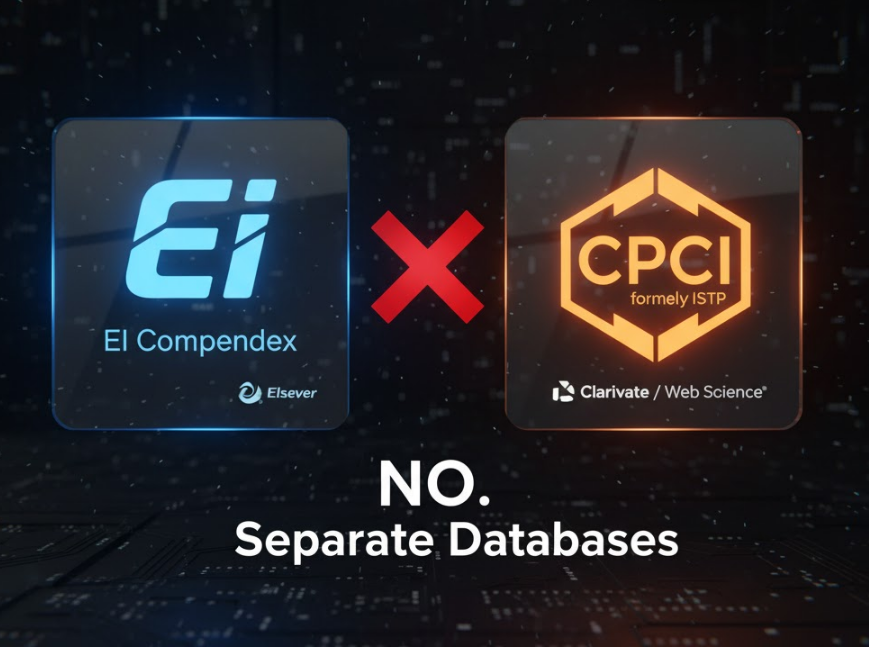
They are competing products from two different companies. Understanding this distinction is essential for making informed decisions about where to submit your research.
What is EI Compendex?
-
Full Name: Engineering Index (Ei) Compendex
-
Owner: Elsevier
-
Focus: This is one of the oldest and most respected engineering databases in the world. Its focus is a deep and comprehensive collection of engineering and applied science literature.
-
What Indexing Means: When a conference is "EI Indexed," it means its proceedings have met the quality standards of Elsevier and will be included in the Compendex database, which is also a core part of Scopus. This is a major mark of quality in the engineering field.
What is CPCI (ISTP)?
-
Full Name: Conference Proceedings Citation Index
-
Old Name: ISTP (Index to Scientific & Technical Proceedings)
-
Owner: Clarivate
-
Focus: CPCI is a part of the Web of Science (WoS) Core Collection. This is the same company that manages the prestigious SCIE (Science Citation Index Expanded). Its focus is to index high-impact conference proceedings across all fields of science and technology, not just engineering.
-
What Indexing Means: Being indexed in CPCI means your paper is part of the influential Web of Science ecosystem. This allows its citations to be tracked and to contribute to your Web of Science h-index, and it is a strong indicator of the conference's quality.
The Core Issue: Two Different Companies, Two Different Products
The reason there is no automatic overlap is that Elsevier and Clarivate are direct commercial competitors.
-
Elsevier runs Scopus (which includes EI Compendex).
-
Clarivate runs Web of Science (which includes CPCI and SCIE).
For a conference to be indexed by both, the conference organizers must apply to, be evaluated by, and be accepted by both companies separately.
Analogy: This is like asking if a product sold at Target is automatically sold at Walmart. No—the product's manufacturer (the conference) must have a separate contract with both retail stores (the indexers).
While it's true that many high-quality, top-tier conferences (like major IEEE events) are indexed by both, it's because their organizers have successfully submitted them to both services. It is never an automatic one-for-one deal.
What This Means for You as a Researcher
-
Never Assume: Do not assume that a conference advertised as "EI Indexed" will also appear in CPCI/Web of Science. The reverse is also true.
-
Check the Conference Website: This is your primary source of truth. Go to the "Publication" or "Indexing" page of the conference website. A legitimate conference will be very specific.
-
Look for Specific Claims:
-
Good: "Proceedings will be submitted to EI Compendex and CPCI for evaluation and indexing."
-
Bad: "Indexed in all major databases." (This is a huge red flag).
-
-
Verify Past Proceedings: The best proof is history. Look up the proceedings from the conference's previous years. Can you find them in the EI Compendex database? Can you find them in the Web of Science Core Collection (by searching for the conference name in WoS)?
Conclusion
EI Compendex and CPCI (ISTP) are two separate, valuable, and prestigious indexing services. One does not include the other.
When choosing a conference, you must identify your priority. Is your goal to be indexed in the core engineering database (EI), or is it to be part of the broader Web of Science citation network (CPCI)? If you need both, you must specifically look for a conference that explicitly promises to submit its proceedings to both Elsevier and Clarivate.a