
How to Find and Verify EI Compendex Conferences: A Researcher’s Guide
For researchers in engineering, computer science, and applied physics, the phrase "EI Compendex" is synonymous with quality. If a conference isn't indexed there, it often doesn't count toward tenure, grant applications, or graduation requirements.
However, the academic landscape is becoming increasingly crowded. With thousands of "International Conferences" announced every year, distinguishing between a prestigious EI-indexed event and a predatory scam is harder than ever.
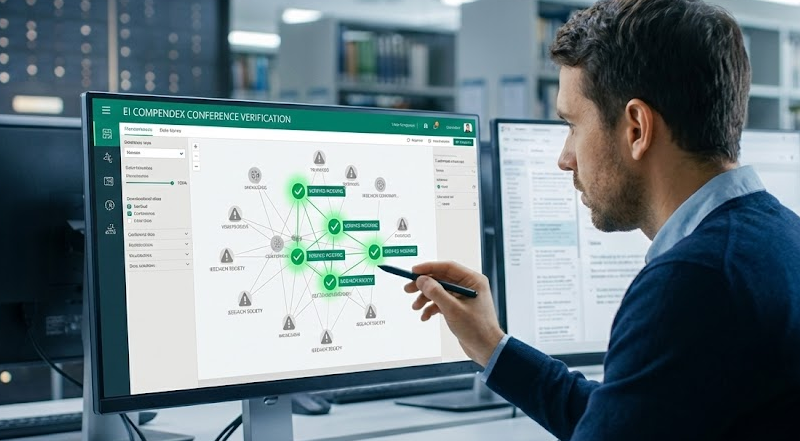
This guide explains why EI Compendex matters, how the indexing process works, and the most reliable strategies to find legitimate upcoming conferences.
What is EI Compendex and Why Does it Matter?
EI Compendex (Engineering Index) is the broadest and most complete engineering literature database in the world. Owned by Elsevier (the same company behind Scopus), it indexes millions of papers from thousands of journals and conference proceedings.
For an engineer or computer scientist, publishing in an EI-indexed conference is critical because:
-
Visibility: It ensures your work is searchable in Engineering Village, the primary search tool for engineering literature.
-
Credibility: It acts as a quality filter. Elsevier reviews the conference's peer-review integrity and regularity before adding it to the index.
-
Career Metrics: Many universities and funding bodies use EI inclusion as a primary metric for evaluating research output.
The Challenge: The "Indexing Promise" Trap
A common trap for young researchers is the "Promised Indexing" scam. A predatory conference website might claim "All accepted papers will be submitted to EI Compendex."
Key Distinction: "Submitted to" does not mean "Indexed by." Any conference can submit papers. Only high-quality conferences get accepted. If you attend a new or low-quality conference, you risk paying high registration fees only to find out months later that the proceedings were rejected by Elsevier.
3 Strategies to Find Legitimate EI Conferences
To avoid wasting your time and budget, you need a proactive search strategy. Here are three ways to find verified events.
1. The "Past Performance" Check (Engineering Village) The most reliable predictor of the future is the past.
-
Go to the official Engineering Village database (if your institution has access).
-
Search for the conference series (e.g., "ICRA" or "CVPR").
-
If the proceedings from 2023, 2024, and 2025 are all indexed, there is a 99% chance the 2026 event will be indexed as well.
2. Use Professional Society Calendars Flagship conferences are almost always safe bets. Check the event calendars of major professional bodies:
-
IEEE (Institute of Electrical and Electronics Engineers)
-
ACM (Association for Computing Machinery)
-
ASME (American Society of Mechanical Engineers) Events sponsored by these organizations have established pipelines for EI indexing.
3. Use Curated Academic Platforms Manually checking individual society websites can be time-consuming, and Google searches often lead to spammy results.
To streamline this, many researchers turn to specialized academic aggregators. Platforms like Academic.net have become essential tools for this purpose. Unlike a general search engine, these platforms curate conference lists, allowing you to filter specifically for "EI Compendex" or "Scopus" status. They provide a centralized view of submission deadlines, locations, and confirmed indexing history, helping you compare multiple opportunities in your niche without navigating through dozens of confusing websites.
How to Verify a Conference Before You Submit
Once you have found a potential conference—whether through a colleague or a platform like Academic.net—perform this 3-step due diligence:
-
Check the Organizers: Is the conference run by a university or a known society? Be wary of conferences run by private "tourism" companies.
-
Look for Specifics: Does the website list the exact ISBN of the proceedings or the name of the publisher (e.g., IEEE Xplore, Springer LNCS)? Vague promises like "published in international journals" are a red flag.
-
Contact the Previous Chair: Find the email of a researcher who organized the previous year's event and ask about the publication timeline.
Conclusion
Publishing in an EI Compendex conference is a strategic career move. It requires looking beyond the flashy website banners and verifying the history and quality of the event. By using trusted databases and curated resources like Academic.net to filter your search, you can ensure your hard work receives the global visibility and recognition it deserves.