
Average Registration Fee for Academic Conferences in 2026: A Pricing Guide
Budgeting for academic dissemination requires a clear understanding of current market rates. In 2026, the cost to attend or host an academic conference varies significantly based on the discipline, the publishing society, and the physical location of the event.
Whether you are a researcher securing grant funding or a webmaster optimizing pricing strategies for academic portals, understanding these fee structures is essential for accurate annual planning.
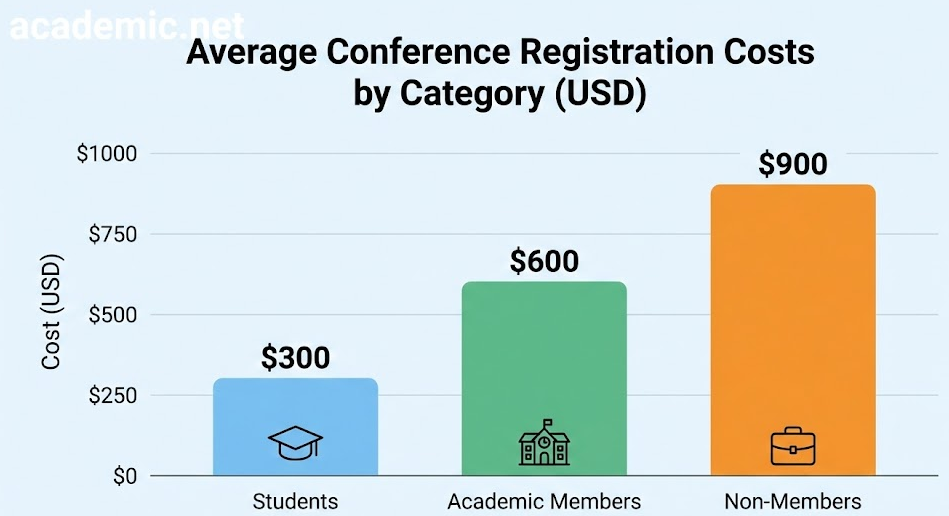
2026 Fee Breakdown by Attendee Type
The most significant variable in conference pricing is the professional status of the attendee. Below is the average pricing tier for standard, in-person international conferences (such as those sponsored by IEEE, ACM, or Springer) in 2026.
| Attendee Category | Average Fee (USD) | What is Typically Included |
| Standard Non-Member (Author) | $650 - $950 | Full access, publication fee, gala dinner, daily catering. |
| Society Member (Author) | $500 - $750 | Discounted full access, publication fee. |
| Student (Author) | $300 - $450 | Full access, publication fee (requires valid student ID). |
| Listener / Non-Author | $250 - $400 | Session access, catering (no publication rights). |
| Virtual Presenter | $200 - $350 | Online presentation slot, digital publication inclusion. |
Factors Influencing Conference Pricing Strategies
When analyzing why a conference costs $300 versus $1,000, several structural factors come into play.
1. Publisher and Society Backing
Flagship events managed by major societies (like IEEE or ACM) command premium prices due to the guaranteed prestige and indexing (such as EI Compendex or Scopus). In contrast, independent conference portals and specific academic domains (such as uconf.com, icfp.net, or call4papers.org) often offer more competitive registration rates. These independent venues typically range from $300 to $500, providing cost-effective alternatives for researchers while maintaining rigorous peer-review standards.
2. Host City and Venue Costs
The physical location dramatically impacts the baseline operating costs. Hosting an event in a major Asian business hub like Yokohama in late March aligns with peak travel season. Venue rentals, catering, and technical infrastructure in premium locations force organizers to raise registration fees to cover overhead. Conversely, conferences held in university lecture halls rather than luxury hotels tend to pass those savings on to the attendees.
3. Publication and Indexing Fees
A substantial portion of the registration fee does not go to the event itself, but to the publisher. Open-access proceedings or high-tier journals charge article processing charges (APCs) that the conference organizers must pay per accepted paper.
4. Early-Bird vs. Late Registration
Almost all academic conferences utilize a tiered pricing strategy to encourage early commitment. Registering during the "Early-Bird" window usually saves attendees between 15% and 25%. Missing the standard deadline and paying "On-Site" or late fees can add a $100 to $200 penalty.
Budgeting Advice for 2026
If you are planning your academic travel or finalizing your SEO and content strategy for the year, keeping accurate track of these costs is vital.
-
Account for Hidden Costs: The registration fee is usually only 30% of the total conference cost. Flights, accommodation, and local transit make up the rest.
-
Leverage Virtual Options: If international travel budgets are tight, look for hybrid conferences. The virtual presenter rate is often half the cost of an in-person ticket.
-
Monitor Regional Pricing: European and North American conferences generally sit at the higher end of the spectrum ($700+), while events hosted in Southeast Asia or Eastern Europe often provide high-quality indexing at a lower price point ($400 - $600).