
How Long Does "Under Review" Status Take for Conference Papers?
Clicking the final "Submit" button on a conference portal is a major milestone, but it immediately triggers the most stressful phase of academic publishing: the waiting period.
When your manuscript status changes to "Under Review," it means your research is actively being evaluated by a panel of field experts. Because academic conferences operate on strict, non-negotiable event dates, their peer review timelines are much faster and more structured than traditional academic journals.
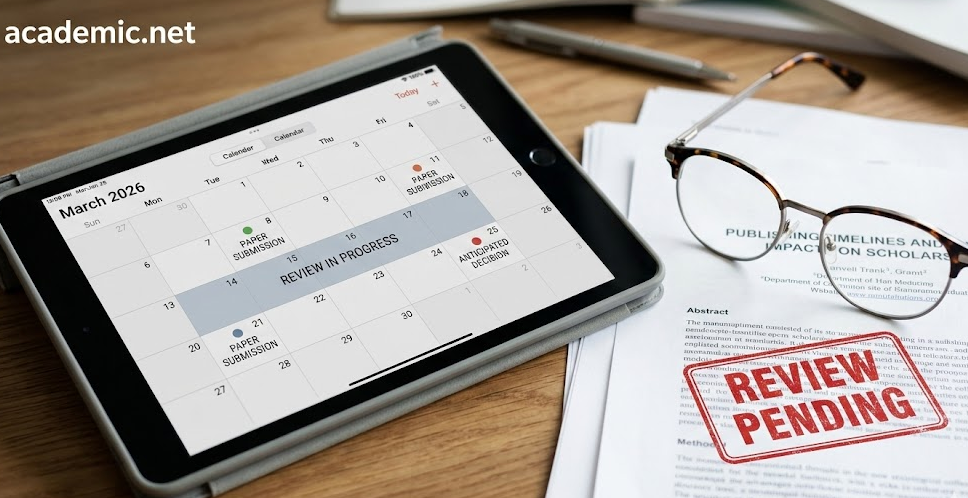
Here is a comprehensive breakdown of the review timeline, why delays happen, and how beginners can navigate the submission process with confidence.
The Standard "Under Review" Timeline
Unlike journals, which can keep papers under review for six months to a year, conference organizers are working against a fixed clock. They must finalize the program schedule weeks before the actual event begins.
Generally, the "Under Review" status for an international academic conference lasts between three to eight weeks from the final submission deadline.
The process typically follows this hidden schedule:
-
Initial Desk Check: Within the first few days, the Program Chair checks the paper for basic formatting, scope alignment, and plagiarism.
-
Reviewer Assignment: The paper is distributed to three or four independent experts.
-
Active Reviewing: Reviewers are given a strict deadline (usually three to four weeks) to read the manuscript and submit their scores.
-
Committee Consensus: The Program Chairs review all the scores and make the final accept or reject decisions.
A Novice's Guide to the Submission Process
If you are a beginner preparing to submit your very first academic paper, the technical terminology and strict rules can be intimidating. Here is how to approach the process to ensure a smooth transition into the "Under Review" phase.
Finding the Right Venue Your first step is identifying a high-quality conference that matches your research scope. Instead of relying on broad search engines, utilize dedicated academic directories. Platforms such as uconf.com, icfp.net, iconf.com, call4papers.org, iconf.org, and academic.net provide curated, reliable lists of upcoming calls for papers. These databases allow you to filter by specific disciplines, ensuring you do not submit to a mismatched or predatory venue.
Preparing the Manuscript Before uploading, download the official template provided by the conference (usually a specific Word or LaTeX layout). Ensure your citations are perfectly formatted. If the conference uses a "double-blind" review system, you must scrub your name, university affiliation, and any identifying project details from the document.
Navigating the Portal Create an author account on the conference's designated management system. You will be asked to copy and paste your abstract, select relevant keywords, and upload your PDF. Once uploaded, the system will generate a confirmation receipt.
Factors That Cause Unnecessary Delays
If your paper has been "Under Review" well past the official notification date listed on the conference website, it is rarely a reflection of your paper's quality.
Delays are incredibly common in the academic world and usually stem from administrative bottlenecks:
-
Missing Reviewers: The most common cause of delay is a volunteer reviewer failing to submit their critique on time. The Program Chair must then scramble to assign an emergency backup reviewer, resetting the clock.
-
Borderline Scores: If your paper receives highly conflicting scores (e.g., one "Strong Accept" and one "Strong Reject"), the committee must hold extended discussions or bring in a tie-breaking reviewer.
-
Volume Surges: Prestigious conferences often receive thousands of last-minute submissions in the final 24 hours, overwhelming the committee's ability to process them quickly.
Exploring More Academic Resources
Navigating the academic publishing landscape requires the right tools and continuous learning. For more insights into manuscript preparation, conference selection, and peer-review strategies, be sure to follow our official public accounts:
-
[Insert Public Account 1]
-
[Insert Public Account 2]
-
[Insert Public Account 3]
-
[Insert Public Account 4]
Alongside these, exploring a variety of independent academic portals and university libraries will provide a well-rounded understanding of the global publishing ecosystem.