
Complete Guide to Academic Conference Submissions
Publishing a paper at an international academic conference is a critical milestone for any researcher. It provides a platform to share novel data, gather feedback from global experts, and build a lasting academic reputation. However, the journey from a finalized draft to an accepted presentation is filled with administrative hurdles and strict formatting rules.
Whether you are a first-year PhD student or a seasoned researcher looking to streamline your workflow, understanding the mechanics of the submission process is essential.
Here is a comprehensive guide covering everything from selecting the right venue to navigating peer review and avoiding the most common publication traps.
1. Selecting the Right Conference
Submitting brilliant research to the wrong conference will result in an immediate rejection. Your first task is to match your manuscript with a venue that aligns with your academic goals and field of study.
-
Analyze the Scope: Read the "Call for Papers" (CFP) thoroughly. Ensure your research directly addresses one of the official tracks or themes listed by the organizers.
-
Check the Indexing: Verify where the conference proceedings will be published. If your university requires specific indexing for graduation or funding, ensure the conference partners with recognized databases like EI Compendex, Scopus, or Web of Science (CPCI).
-
Investigate the Committee: Look at the Program Committee. Legitimate conferences are organized by established academics from recognized universities. If you cannot verify the identities of the organizers, it may be a predatory event.
-
Review Important Dates: Pay strict attention to the submission deadline, notification date, and the actual dates of the event to ensure they fit your schedule and funding timeline.
2. Formatting the Manuscript
Once you have selected a conference, you must mold your research into their exact specifications. Formatting errors are the leading cause of delays and desk rejections.
-
Use the Official Template: Download the exact Word or LaTeX template provided by the conference (commonly standard IEEE or Springer formats). Never attempt to recreate the margins or font sizes manually.
-
Manage Your Citations: Ensure every reference in your bibliography is cited correctly in the text, and that the formatting strictly adheres to the requested style (e.g., IEEE numbered style vs. APA alphabetical style).
-
Prepare for Double-Blind Review: If the conference uses a double-blind peer review process, you must submit an anonymized draft. Remove all author names, affiliations, grant acknowledgments, and identifying document properties from the PDF.
-
Run a Plagiarism Check: Pass your final draft through a similarity checker like Turnitin or iThenticate. Aim for an overall similarity score below 20%, ensuring no single source accounts for more than a 5% match.
3. Navigating the Submission Portal
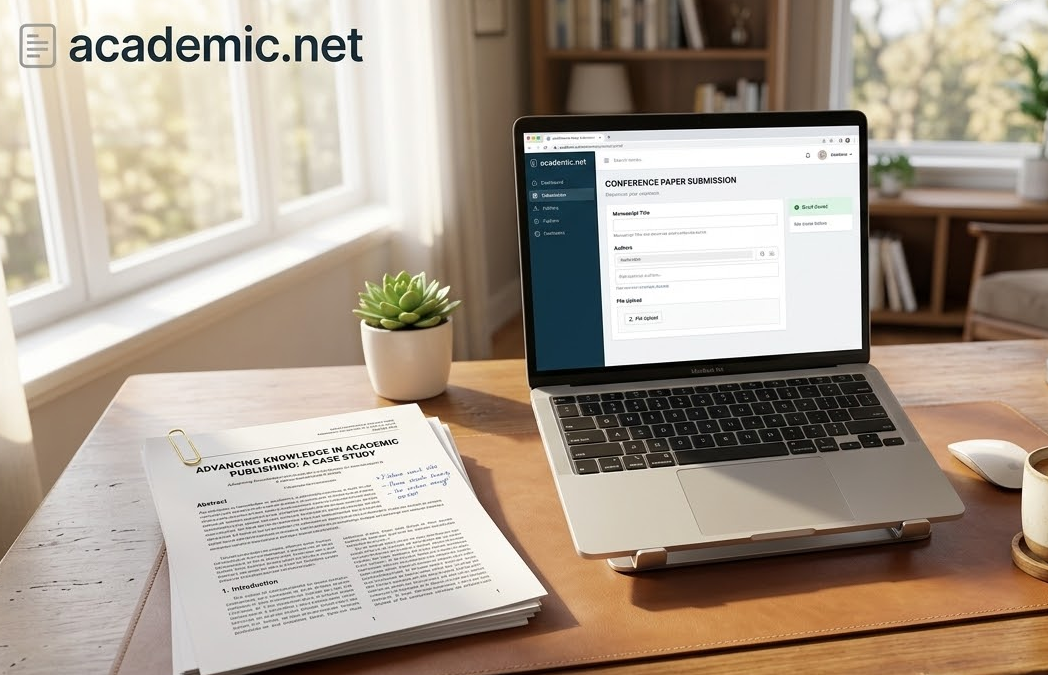
Modern conferences use automated online systems to manage thousands of submissions. The most common platforms include EasyChair, EDAS, and CMT.
-
Register Early: Create your author account well before the deadline. Link your ORCID profile to ensure accurate global tracking of your research.
-
Enter Accurate Metadata: When creating a new submission, copy your title and abstract carefully. Ensure you manually add the names and institutional emails of every co-author in the exact order they appear on the paper.
-
Select the Corresponding Author: Designate the individual who will be responsible for receiving administrative emails, handling revision requests, and signing the final copyright forms.
-
Upload the PDF: Submit the file. If you are using a strict system like EDAS, it may run an automated check upon upload. If it flags un-embedded fonts or margin errors, correct them in your source file and upload again.
4. The Peer Review and Acceptance Process
After clicking submit, your paper enters the "Under Review" phase. The timeline and expectations during this period are highly structured.
-
The Waiting Period: Conference review cycles typically take between three to eight weeks. During this time, three or four independent experts will evaluate your methodology, originality, and clarity.
-
Notification of Decision: You will receive an email detailing the committee's decision: Accept, Reject, or Revise and Resubmit.
-
Handling Revisions: If asked to revise, address every reviewer comment systematically. Create a detailed "Response to Reviewers" document outlining exactly how and where you altered the manuscript to satisfy their critiques.
-
The Camera-Ready Submission: Once fully accepted, you will submit the final, un-blinded version of your paper (the "Camera-Ready" copy) and complete the mandatory copyright transfer agreement.
5. Avoiding Common Pitfalls
Even excellent research can be derailed by procedural mistakes. Keep these common pitfalls in mind to ensure a smooth submission process.
| Common Pitfall | The Consequence | How to Avoid It |
| High Similarity Score | Immediate desk rejection | Paraphrase literature reviews thoroughly and properly cite all previous work, including your own. |
| Out of Scope | Rejection without peer review | Align your abstract and keywords directly with the official conference tracks before submitting. |
| Template Violations | System upload failure or editorial rejection | Use the official 2026 LaTeX or Word template without altering margins, line spacing, or column widths. |
| Breaking Double-Blind | Reviewer bias or automatic rejection | Scrub all identifying information from the text and file metadata for the initial submission. |
| Dual Submission | Retraction and potential publisher bans | Never submit the exact same manuscript to two different conferences or journals at the same time. |