
How Does Double-Blind Peer Review Work for Conference Submissions?
In academic publishing, peer review is the ultimate quality control mechanism. To eliminate unconscious bias and ensure a level playing field, many top-tier international conferences enforce a strict double-blind peer review process.
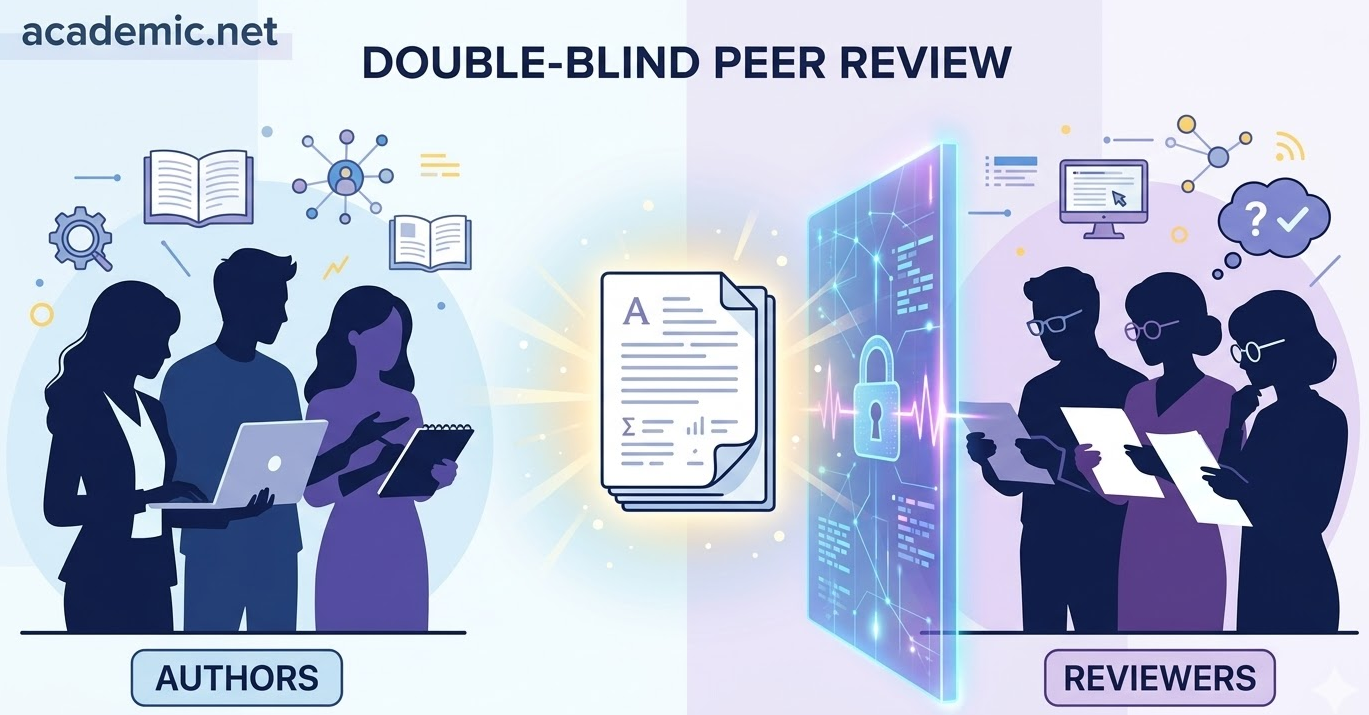
The definition of "double-blind" is straightforward: the reviewers do not know who wrote the paper, and the authors do not know who is reviewing it.
This mechanism ensures that a manuscript is evaluated purely on its scientific merit, data integrity, and originality, rather than the prestige of the author's university, their gender, or their past publication record. Here is a complete breakdown of how the process works behind the scenes and the strict rules authors must follow to participate.
1. The Double-Blind Review Pipeline
When you upload your manuscript to a submission portal, the document goes through a highly compartmentalized workflow to maintain anonymity.
-
System Anonymization: When you fill out your real name, email, and institution in the online submission portal, the system locks that metadata away. The reviewers are only given access to the uploaded PDF file, not your author profile.
-
The Desk Check: The Program Chair or Area Chair (who usually knows the authors' identities) performs a preliminary screening. If they open the PDF and see your name under the title, your paper will receive an immediate "Desk Reject" for violating the double-blind policy. It will never reach the reviewers.
-
Independent Evaluation: The anonymized PDF is distributed to three or four expert reviewers. They score the methodology, novelty, and clarity, and write their feedback.
-
Decision and De-anonymization: Only after all scores are submitted and the program committee makes a final "Accept" or "Reject" decision are the authors' true identities revealed to the committee for scheduling and publication purposes.
2. How to Anonymize Your Manuscript
The burden of maintaining anonymity falls entirely on the author. You must prepare a "blinded" version of your manuscript before uploading it. This requires scrubbing four specific areas:
-
The Title Block: Delete all author names, email addresses, and university affiliations from the top of the first page. Leave this area blank or use a placeholder like "Anonymous Author(s)" if the conference template suggests it.
-
Acknowledgments: Completely remove the acknowledgments section for the initial submission.
Thanking specific grant agencies, lab directors, or fellowship programs instantly reveals your institution. You will add this section back into the final "Camera-Ready" version after acceptance. -
Supplementary Materials: Ensure that any uploaded datasets, code repositories, or video files do not contain your name or your university's logo. If you link to a GitHub repository, create an anonymous account specifically for the review period.
-
Hidden Document Metadata: Word processors automatically attach your registered username to the file's properties. Before submitting, you must manually inspect the PDF properties and strip out any hidden author tags or creation metadata.
3. The Self-Citation Trap
The most common way beginners accidentally "break the blind" is by improperly citing their own previous work in the literature review or methodology sections.
You are absolutely allowed to cite your past papers, but you must do so objectively.
The Wrong Way (First-Person):
"As we previously demonstrated in [5], the algorithm improves efficiency by 20%." > (This tells the reviewer exactly who you are.)
The Right Way (Third-Person):
"As Smith et al. demonstrated in [5], the algorithm improves efficiency by 20%." (You are treating your own past work as if it belongs to a completely different, unrelated researcher.)
If an essential piece of your previous work is currently under review elsewhere and unpublished, standard practice is to list it in the references as "Anonymous, Details omitted for double-blind reviewing," and provide the unpublished manuscript to the Program Chair as a supplementary file.
4. Why Double-Blind Review Matters
Data consistently shows that single-blind reviews (where reviewers know the authors) inherently favor established researchers from famous institutions.